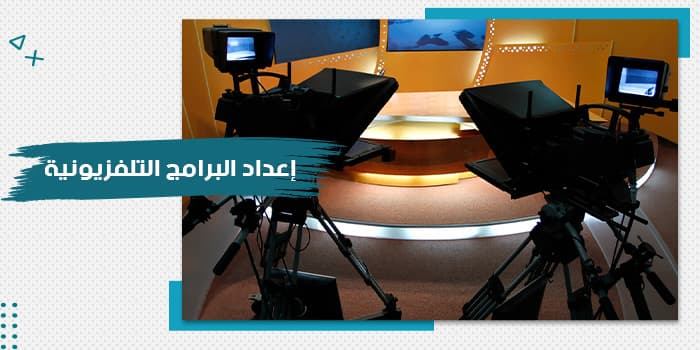
Digital media has created exciting opportunities for the television reporter to produce and share their stories, and in order for reporters to become effective creators of digital content, they need to master a diverse range of reporting skills; they need a degree of competence in digital media just as in the fundamentals of reporting.
A television report is not merely words the reporter delivers in their report, but rather the way the image, shots and scenes appear in a clear, defined format, addressing all aspects of the idea or the required objective within a specific time period and using varied methods that differ according to the nature of the television report, its type, its capabilities and the sources it uses.
The television report is considered one of the most important news formats used to convey the message or information to the viewer in a way that differs from other formats. The idea of the report also differs from one producer to another, from one reporter to another, and from one work team to another, each according to their performance and their keenness to present a distinctive, engaging report.
Television reporting generally suffers from the phenomenon of a significantly low level of viewer attention. On average, a viewer's attention cannot be maintained for more than forty seconds.
The reporter should therefore aim to keep that viewer in front of their screen for as long as possible, and this will only be achieved by working to present the greatest possible amount of accurate and new information in an attractive, simple format that the viewer can understand.
The format of the television report gives television reporters a great opportunity to produce a well-rounded piece of work that can attract the interest of the largest segment of viewers.