

Management & HR
Institutional Restructuring Training Kit
A kit on managing organisational change and crises, diagnosing institutional failure, and the concepts, reasons and methods of administrative and financial restructuring.
6 sessions
The administrative system is the framework that organises administrative processes within an institution or organisation to achieve its objectives efficiently and effectively. It relies on a set of rules, principles, and mechanisms that guide work and ensure coordination between human and material resources to achieve the specified objectives.
The administrative system includes processes such as planning, organising, directing, and control, which ensures the continuity and improvement of performance.
Administrative tools
Administrative functions
Administrative resources
-
Systems are characterised by interaction, and this interaction takes place through the mutual relationships between the different elements.
-
That is, the dependence of the system's elements on one another, meaning that the inputs of a given system become inputs for another subsystem.
-
This means that the parts of the system perform their designated functions within the framework of the system and according to a specific coordination, such that this integration produces a cooperative outcome that represents the aim or objective of the system.
-
Systems are also characterised by a hierarchical structure, that is, the existence of a particular structure and arrangement for their constituent elements.
-
This means that the system has control over all available resources.
-
This means that the system has the ability to face emergency conditions.
-
This refers to translating the system's components into more detailed procedures and plans.
-
This serves as the organic link between the system's various components and similar systems in society.
School principals, education administrators, and systems analysts.
We keep the content up to date; every download gets the latest version.
A kit on managing organisational change and crises, diagnosing institutional failure, and the concepts, reasons and methods of administrative and financial restructuring.

A kit on advanced performance-measurement skills: writing performance reports, the balanced scorecard stages, 360-degree evaluation, and the principles of institutional excellence.

A kit on the concept, legal basis and principles of administrative investigation under Saudi law, covering disciplinary authorities, the right to confront evidence and to defence, and investigation neutrality.

A kit on the concept, aims and conditions of delegating authority, covering its stages, benefits and drawbacks, and the obstacles that prevent delegation from being effective.

A kit on measuring and evaluating job performance, covering its concept, components, standards and levels, modern evaluation methods, performance indicators, and how to write performance reports.

A kit on the principles and standards of work ethics, covering workplace conduct and values, an individual's duties towards their job, and the impact of work ethics on organisational performance.
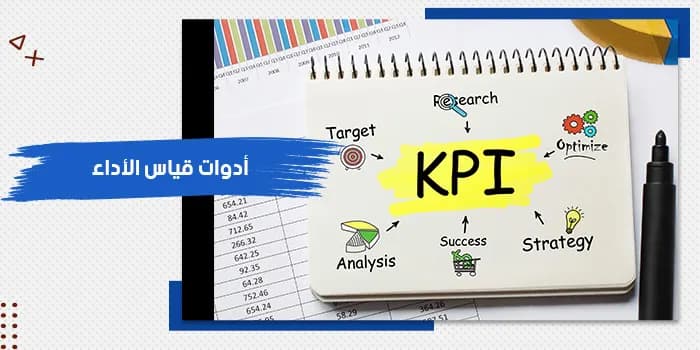
A kit on the tools used to measure and evaluate performance, covering performance indicators, their characteristics and levels, checklists, 360-degree evaluation, and the difficulties of institutional performance measurement.

A kit on the concept, sources and effects of psychological stress, covering its stages, symptoms and causes, relaxation techniques, and work-related stress and how to overcome it.

A kit on ISO 9001 quality management and its role in monitoring quality and managing processes within an institution, covering the aims, requirements and clauses of the standard in education.

A kit on small business entrepreneurship and innovation, covering project planning, success and failure factors, Saudi support for SMEs, and digital marketing strategies and tools.