

Management & HR
Institutional Restructuring Training Kit
A kit on managing organisational change and crises, diagnosing institutional failure, and the concepts, reasons and methods of administrative and financial restructuring.
6 sessions
The system of the "waqf" (endowment) is the historical formula that Muslims devised to seek closeness to God through participation in building their societies and developing the earth. Westerners borrowed it and transmitted it from the Ottoman state in the nineteenth century, and Westerners later called it "civil society organisations". It is widely acknowledged that the Islamic waqf system remained, for thirteen centuries, one of the most magnificent images of human cooperation and an abundant spring of goodness, until the state of endowments in the later eras of the Ottoman state fell into decline, stagnation and neglect, and as a result their properties were subjected to collapse and ruin, so their returns diminished and their benefits dwindled. Despite attempts at reform, they did not bear the hoped-for fruit, especially after the Islamic countries entered the stage of European colonialism. With the arrival of the twentieth century, it seemed to many thinkers and reform leaders in our countries that the history of the Islamic waqf system had reached its end in contemporary Arab society, which was reflected in the harshness of the attack, both theoretical and practical, to which this system was subjected. The waqf was struck by a long wave of decline, and knowledge of it eroded just as its material assets of agricultural land and built real estate eroded, and negative images of waqf buildings became imprinted in our minds, as being neglected and abandoned. The waqf institution played a distinguished role in the history of Arab-Islamic civilisation, having established the material basis for and funded a vast network of service facilities and public benefits over many centuries, during which the waqf institution underwent various developments in its institutional and organisational structure, starting from the independent individual model, then the individual model under judicial supervision, and finally direct government administration of endowments. In an attempt to revive the waqf institution so that it may rise to its role in serving comprehensive development, official and popular efforts have turned towards developing the institutional frameworks of waqf administrations, in order to create an effective institutional framework for managing and investing endowments.
An act of devotion that God Almighty urged His servants towards, in the context of His encouragement and praise of charity and spending money on acts of righteousness and goodness.
Retaining the asset itself in the ownership of the endower, and dedicating, that is donating, its yield or benefit; meaning holding the asset and preventing its ownership from being transferred by any means of ownership, so that it may not be disposed of by sale or gift, nor inherited.
Retaining the asset, such that it may not be disposed of by sale, gift or inheritance, and directing its yield to one of the charitable causes according to the endower's stipulation.
Retaining property that can be benefited from while its substance remains, for a permissible purpose.
This is one of the important components for the success of the waqf process, as related studies confirm, and historical experience shows that, at the beginning of the establishment of endowments, one or more supervisors (nazir) were responsible for their care, without any kind of oversight from the state. But due to this great expansion in the volume of endowments and their influence, this required the formation of a specific organisation for managing them, instead of the endowers caring for them themselves. This led those in authority to be keen on appointing judges to undertake the tasks of preserving and caring for these endowments.
Waqf administrators, charitable institution managers, and researchers in waqf affairs.
We keep the content up to date; every download gets the latest version.
A kit on managing organisational change and crises, diagnosing institutional failure, and the concepts, reasons and methods of administrative and financial restructuring.
A kit on advanced performance-measurement skills: writing performance reports, the balanced scorecard stages, 360-degree evaluation, and the principles of institutional excellence.

A kit on the concept, legal basis and principles of administrative investigation under Saudi law, covering disciplinary authorities, the right to confront evidence and to defence, and investigation neutrality.

A kit on the concept, aims and conditions of delegating authority, covering its stages, benefits and drawbacks, and the obstacles that prevent delegation from being effective.
A kit on measuring and evaluating job performance, covering its concept, components, standards and levels, modern evaluation methods, performance indicators, and how to write performance reports.

A kit on the principles and standards of work ethics, covering workplace conduct and values, an individual's duties towards their job, and the impact of work ethics on organisational performance.
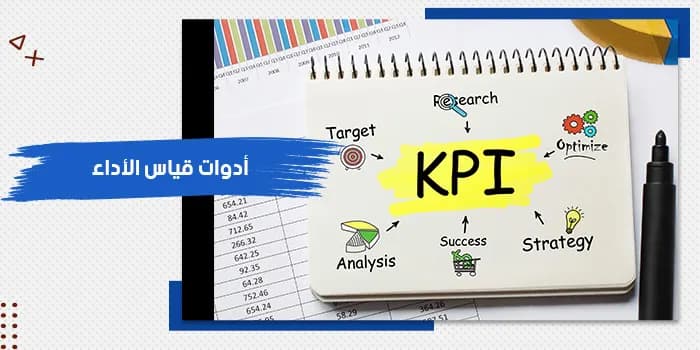
A kit on the tools used to measure and evaluate performance, covering performance indicators, their characteristics and levels, checklists, 360-degree evaluation, and the difficulties of institutional performance measurement.

A kit on the concept, sources and effects of psychological stress, covering its stages, symptoms and causes, relaxation techniques, and work-related stress and how to overcome it.

A kit on ISO 9001 quality management and its role in monitoring quality and managing processes within an institution, covering the aims, requirements and clauses of the standard in education.

A kit on small business entrepreneurship and innovation, covering project planning, success and failure factors, Saudi support for SMEs, and digital marketing strategies and tools.