

Management & HR
Institutional Restructuring Training Kit
A kit on managing organisational change and crises, diagnosing institutional failure, and the concepts, reasons and methods of administrative and financial restructuring.
6 sessions
Writing a report is an easy and enjoyable matter, provided it adheres to recognised standards, and the report, like letters, is needed by every employee regardless of how senior their position is, since managers have come to need a means of monitoring and overseeing aspects of implementation at work. When senior management receives information from lower down the organisation, we can compare results and the appropriate decisions are issued, and coordination is achieved if the manager has the information and data about the work they manage.
Writing reports
A report is a tool or means for presenting facts, opinions and trends, analysing them, and drawing out various conclusions and recommendations to address a particular subject or problem.
Objectives of reports
Understanding reports helps the institution's leadership obtain the information needed about the institution's administrative, technical and financial situation.
Reports help in the process of analysing and diagnosing the institution's conditions and reality in terms of points of strength and ways to develop them, as well as points of weakness and ways to address them.
Reports contribute to highlighting and presenting the institution's achievements in general, and those of its departments, divisions or projects in particular.
Follow these steps to write an effective work report:
First: Identify your target audience
Second: Determine the content in advance
Third: Determine the structure of your report
Fourth: Use formal language
Fifth: Proofreading and editing
Here are some writing basics you can apply when writing reports:
-
Organise the content in a logical and sequential way. Use an introductory opening, a body of the report containing the main points, and a conclusion that summarises the information and offers recommendations if necessary.
-
Start a new paragraph for each main idea. Make sure each paragraph has a topic, main sentences, and supporting details.
-
Use clear and simple sentences. Avoid complex sentences and difficult terminology if the audience is non-specialist.
-
Use examples and charts to illustrate concepts and data. This makes the report clearer and stronger.
-
Before submitting the report, make sure the information is correct and review spelling and grammatical errors. Check the formatting and use headings, paragraphs and subheadings appropriately.
-
After writing the report, set aside time to edit and review it. Check the logical sequence and proper expression.
-
In conclusion, provide a brief summary of the main points and recommendations, if any.
By applying these basics, you will be able to write reports that are easy to read and understand and that convey information clearly.
Administrative staff, managers and department heads, and anyone who needs to write work reports.
We keep the content up to date; every download gets the latest version.
A kit on managing organisational change and crises, diagnosing institutional failure, and the concepts, reasons and methods of administrative and financial restructuring.
A kit on advanced performance-measurement skills: writing performance reports, the balanced scorecard stages, 360-degree evaluation, and the principles of institutional excellence.

A kit on the concept, legal basis and principles of administrative investigation under Saudi law, covering disciplinary authorities, the right to confront evidence and to defence, and investigation neutrality.

A kit on the concept, aims and conditions of delegating authority, covering its stages, benefits and drawbacks, and the obstacles that prevent delegation from being effective.

A kit on measuring and evaluating job performance, covering its concept, components, standards and levels, modern evaluation methods, performance indicators, and how to write performance reports.

A kit on the principles and standards of work ethics, covering workplace conduct and values, an individual's duties towards their job, and the impact of work ethics on organisational performance.
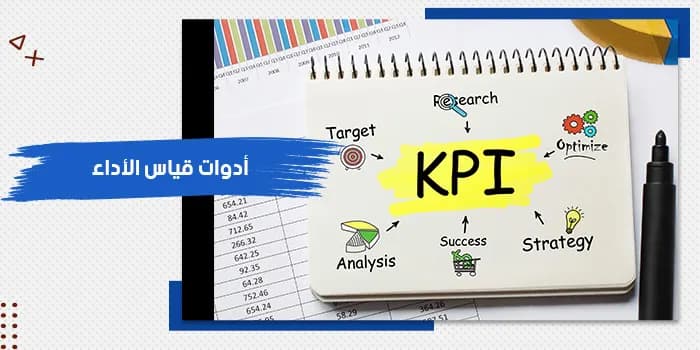
A kit on the tools used to measure and evaluate performance, covering performance indicators, their characteristics and levels, checklists, 360-degree evaluation, and the difficulties of institutional performance measurement.

A kit on the concept, sources and effects of psychological stress, covering its stages, symptoms and causes, relaxation techniques, and work-related stress and how to overcome it.

A kit on ISO 9001 quality management and its role in monitoring quality and managing processes within an institution, covering the aims, requirements and clauses of the standard in education.

A kit on small business entrepreneurship and innovation, covering project planning, success and failure factors, Saudi support for SMEs, and digital marketing strategies and tools.