

Self-development
Investing in Talent Training Kit
A kit on investing in talent at the level of the family, school and organisations, covering why it matters, how to identify gifted individuals, and models for nurturing talent.
2 sessions
Young leaders play an ever-growing role in our world today in all fields, and attention to developing leadership competencies and investing in those available has become a matter of great importance, given what is hoped for from it at the level of management and production.
Modern literature discusses how the concept of youth extends to many scientific perspectives, where the biological perspective emphasises the age stage of the youth category, in which organic, mental and psychological maturity come together.
Leadership:
This is the ability to influence others and direct their behaviour to achieve shared goals. It is therefore a responsibility towards the group being led, in order to reach the set objectives.
The leader:
This is the person who uses their influence and power to affect the behaviour and orientations of the individuals around them in order to accomplish specific goals.
It is the connecting link between employees and the institution's plans and future visions.
It is the crucible within which all concepts, strategies and policies are fused together.
Reinforcing the positive forces within the institution and reducing the negative aspects as much as possible.
Controlling and resolving work problems, settling disputes, and weighing up between opinions.
Developing, training and caring for individuals as the institution's most important resource, as individuals also take the leader as a role model.
Leadership styles vary, and they cannot simply be classified as "good" or "bad", because each style has its advantages and disadvantages. The choice of the appropriate style depends on the leader's personality and abilities, on the characteristics of the individuals they lead, and on the nature of the working environment.
Innate personal traits: such as thinking, planning, creativity and the ability to visualise.
Human (social) skills: such as relationships, communication and motivation.
Technical (specialist) skills: such as problem solving and decision making.
Self-confidence is believing in oneself, relying on oneself, and having faith in oneself.
A person's faith in their goals, decisions, capabilities and potential, that is, faith in themselves.
It is a person's respect for themselves, and the greater the respect, the greater the self-confidence.
That an individual should have a sufficient feeling that they are capable of succeeding in the matter they wish to undertake.
They understand themselves: they notice their own development and are aware of their points of weakness.
They know what they want: their goals are clear and their hopes have no limits.
They think and act positively: with people in general and with peers in particular, even if they have problems.
They act skilfully and have a sense of being able to face life's problems in the present and the future.
Young women leaders, female employees seeking to develop their leadership skills, and trainers.
We keep the content up to date; every download gets the latest version.
A kit on investing in talent at the level of the family, school and organisations, covering why it matters, how to identify gifted individuals, and models for nurturing talent.
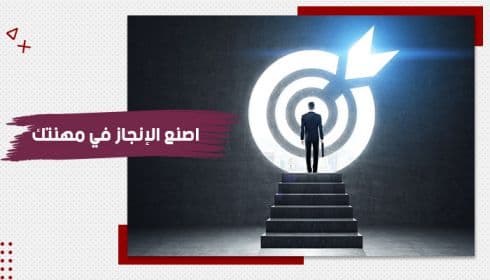
A kit on self-motivation and achievement at work, covering types of motivators, the difference between positive and negative motivation, how to generate self-motivation, and building self-confidence.

A specialised kit explaining self-management and its role in guiding behaviour and achieving goals, supporting emotional control, personal skill development, self-confidence and psychological balance.

A kit on discovering talent and building capabilities: personality components and types, self-management and overcoming low confidence, methods for identifying gifted individuals, SWOT analysis, and the mental habits of highly effective people.

A kit on discovering and developing student talent: the features of gifted students, why they need support, how to identify them, methods for developing talent, and Saudi Arabia's efforts in this field.

A kit on personal excellence in the workplace: the concept and benefits of excellence, the traits of an outstanding employee, how to stay positive at work, job quality, and the keys to career success.
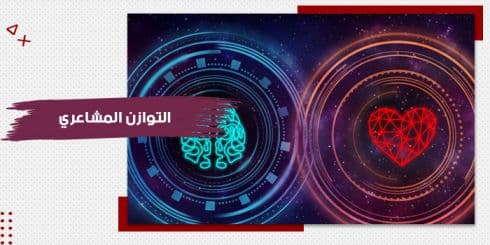
A kit on emotional balance: what emotional balance means and how to achieve it, controlling feelings and reactions, staying positive and unbiased, where feelings come from, and strategies for changing how we feel.

A specialised kit explaining the relationship between anxiety, stress, distraction and poor concentration, covering concentration disorders, the causes of distraction, and methods for managing stress and anxiety.
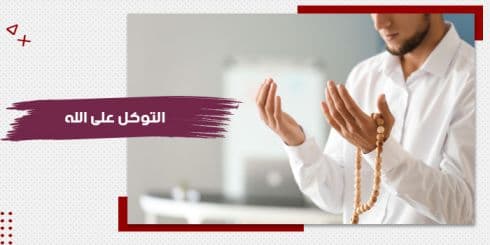
A kit on reliance on God (tawakkul): its meaning and reality, its types and ranks, its fruits and obstacles, the relationship between faith, destiny and taking the means, and the rulings related to it.

A specialised kit explaining social intelligence and its role in understanding and interacting with others, developing the ability to perceive feelings, motives and non-verbal cues and respond to them effectively.